Things to Do in The Hague, Netherlands: The Perfect One-Day Itinerary

When we first moved to The Hague, I didn't really know what to expect. It was just another Dutch city to me. Not Amsterdam, not Rotterdam, just somewhere I'd vaguely heard of. I knew it had a beach, and that was about it.

But then we started actually exploring, and I don't know how else to say this, it just kept getting better. The art museums are genuinely world class. The Indonesian food is unreal (this city has the biggest Indonesian food scene outside of actual Indonesia). There's a palace where the king goes to work every day, streets that feel like they haven't changed in 400 years, and then you hop on a tram and fifteen minutes later you're standing on a beach watching the sun go down over the North Sea. It's a lot for one city.
We've been here over a year now and we're still finding new spots, so here's what I'd tell you to do if you had one day.

Quick Info
Best arrival station: Den Haag Centraal (for the city centre) or Den Haag HS (some intercity/international routes)
From Amsterdam: ~50 min by direct train, €15.30 one way
From Rotterdam: ~25 min by train
From Delft: ~7 min by train
From Schiphol Airport: ~30 min by train
Getting around: The city centre is flat and walkable (about 1.5 km across). For Scheveningen beach, take tram 1 or 9 (~15 min ride)
Best time to visit: Late spring through early autumn for the beach, but honestly, the museums don't care about weather
The Itinerary
Morning: Mauritshuis
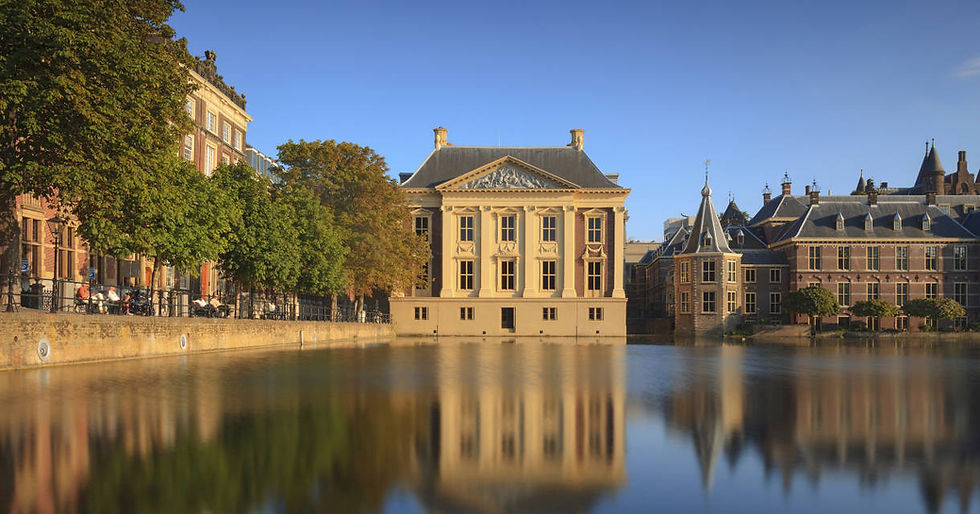
Start here. Vermeer's Girl with a Pearl Earring lives in this building, and so does Rembrandt's The Anatomy Lesson of Dr. Nicolaes Tulp and Fabritius' The Goldfinch.

The Mauritshuis is small. It used to be someone's actual house (a colonial governor named Count Johan Maurits who clearly liked nice things). The painted ceilings and chandeliers are still there, so you're basically walking through a very fancy 17th-century mansion looking at masterpieces. It doesn't feel like a museum, it feels like you snuck into someone's private collection.
Give it about 90 minutes. That's enough to see everything without getting that glazed-over feeling you get in bigger museums. We loved that about it actually, you walk out feeling like you saw everything and you're not exhausted.
Book your time slot online though. Weekends sell out and you don't want to be standing outside with no ticket.
Practical info:
Address: Plein 29
Hours: Mon 13:00–18:00, Tue–Sun 10:00–18:00
Tickets: €21 adults, free for under 18, free with Museumkaart
Website: mauritshuis.nl
Heads up for late August/September 2026: The Mauritshuis is closed for maintenance from 24 August to 20 September. If that's your window, go to Escher in The Palace or Kunstmuseum Den Haag instead.
Morning: The Hofvijver & Binnenhof

You walk out of the Mauritshuis and the Hofvijver is right there. It's this wide court pond with swans, and the towers and old brick of the Binnenhof reflected in the water. On a still morning it genuinely looks like a painting. Everyone stops for a photo here and honestly you should too, it's one of those views that just works every time.

The Binnenhof is the 13th-century complex where the Dutch parliament sits. It's under a massive renovation right now and won't reopen until 2031, so you can't go inside. But the view from across the pond is the main thing anyway. Walk along the water and look for the Torentje, the "Little Tower" where the Prime Minister works.
Morning: Lange Voorhout
Three minutes from the Hofvijver you'll hit Lange Voorhout. It's a wide boulevard with old linden trees, embassy buildings, and some of the fanciest facades in the city. In spring and summer the trees make this green tunnel overhead and the whole thing feels more like a park than a street. Really lovely to just walk through.
If you're here on a Thursday or Sunday between May and September, there's an antique and book market under the trees. Old maps, vintage Delft Blue, silverware, leather-bound books, random curiosities. We've spent a good hour just browsing through it even when we weren't looking to buy anything. Food truck festivals pop up on weekends too.
Late Morning: Noordeinde & The Hofkwartier
Keep walking and you'll reach Noordeinde, the street that leads up to the King's working palace. You can't go in (he's actually in there working), but the gates and guards are right there, and the palace gardens behind it are open.

The real reason to come here though is the street itself. Noordeinde is probably The Hague's best shopping street and it's all independent. No chains anywhere. Art galleries, antique shops, boutiques, and two cafes I keep going back to. Bookstor Cafe at number 39 is a bookshop-cafe that's been around nearly a century, with shelves floor to ceiling and a hidden back garden that most people don't find their first time.
Turn into the side streets behind the palace and you're in the Hofkwartier, the Court Quarter. Prinsestraat, Papestraat, Molenstraat. Narrow old-brick lanes with indie shops, small galleries, juice bars. Papestraat especially has that Amsterdam Nine Streets energy but without the tourist crowds.
If you like matcha, Hug The Tea on Papestraat is worth a stop. Two sisters have been running this Japanese tea bar for a decade. The matcha is made fresh, they do onigiri, and the whole place is bamboo wood and Japanese fans. It's the real thing, not a gimmick.
Lunch: Indonesian Food
The Hague has the largest Indonesian community in the Netherlands and the food here is on a completely different level from anywhere else in the country. This is something we didn't know before moving here and now it's one of our favourite things about the city.
If you've never had a rijsttafel, you need to try it here. It literally means "rice table" and it's this Dutch-Indonesian thing where they bring out like 12 to 20 small dishes all at once. Satay, rendang, sambal goreng, gado-gado, tempeh, curried vegetables, all centred around rice. You eat it family-style and you will eat too much. That's kind of the whole point.

Where to go:
Keraton Damai (Groot Hertoginnelaan 57). This is my top pick. The Haris family has been running this place since 1992. East Javanese cooking, cosy room full of wayang puppets and orchids everywhere. Order the rijsttafel Keraton Damai and you get four types of satay, rendang, coconut vegetables, and honestly more dishes than your table can comfortably hold. We finished with spekkoek (layered spice cake) and could barely move after. Reserve ahead because it fills up.
Istana (Wagenstraat 73). More casual, consistently great, nearly a thousand positive reviews. Good backup if Keraton Damai is full.
For something quick: The Chinatown area near Wagenstraat has smaller warungs (casual Indonesian eateries) where a plate of nasi padang is under €12. Waroeng Padang Lapek is a local favourite.
Budget around €30–45 per person for a full rijsttafel with drinks. Worth every cent.
Not in the mood for Indonesian? A few other places we like:
Silvi Gastrobar (Zeestraat 56A). Mediterranean shared dining by a Greek brother-sister duo. Small plates, good wine, relaxed Zeeheldenkwartier vibe. Dinner Tue–Sat, lunch Fri–Sat.
De Basiliek (Korte Houtstraat 4A). Modern cuisine, back-to-back Michelin Bib Gourmand, and very reasonable prices for the quality. One of the best value meals in the city.
Walter Benedict (Denneweg). Popular brunch spot, great Eggs Benedict, good for a more casual sit-down lunch.

Afternoon: De Passage
After lunch, walk through De Passage, the oldest covered shopping arcade in the Netherlands. It opened in 1885 and it was built to look like the grand Parisian passages. Glass ceilings, neo-Renaissance facades, terrazzo floors.
There's a fun bit of history here. When it first opened, upper-class ladies would send their servants to place orders first, then come shopping themselves between 2 and 5 pm. Different social classes literally had their own designated shopping hours. Can you imagine!
A newer extension connects through to Grote Marktstraat with Delft Blue ceramic tiles on the facade. Walk through even if you're not buying anything. It takes five minutes and the architecture is really beautiful.
Afternoon: Panorama Mesdag
Ten minutes on foot from the Passage and you're at Panorama Mesdag. This is the one that catches everyone off guard. It definitely caught us off guard.

It's a cylindrical painting from 1881. I know that doesn't sound like much. But let me explain.
You go up a spiral staircase and come out on what feels like the top of a sand dune.
There's actual sand under your feet. And then around you, all 360 degrees, is this enormous painting, 120 metres around and 14 metres high, showing Scheveningen beach as it looked almost 150 years ago. The dunes, the sea, the fishing village. The line between the real sand at your feet and the painted horizon is almost impossible to find. It genuinely messes with your brain a little.
It's the largest painting in the Netherlands and the oldest panorama in the world that's still in its original location. Takes about 30 minutes to see everything. There's a free audio tour in 16 languages and a cafe for coffee after.
Practical info:
Address: Zeestraat 65
Hours: Tue–Sun 10:00–17:00, closed Mondays
Tickets: €16 adults, €12 students, free under 12, free with Museumkaart
Afternoon: Peace Palace
From Panorama Mesdag you walk about 10 minutes through the embassy district and reach the Peace Palace (Vredespaleis). Even if international law isn't your thing at all, the building is pretty hard to ignore once you're standing in front of it.

This is where the International Court of Justice sits, the main judicial body of the United Nations. When you hear "The Hague" on the news, this is usually the building they mean. It was built in 1913 with money from Andrew Carnegie and decorated with gifts from countries around the world. The wrought-iron gates came from Germany, the marble from Italy, the fountain from Denmark. It's kind of amazing when you think about it, all these countries contributing pieces to one building about peace.

You can't just walk in because the courts are actually in session, and guided tours need to be booked well in advance through vredespaleis.nl. But the building and gardens are impressive from outside, and there's a small information centre near the entrance if you want more context.
Good to know: Tram 1 toward Scheveningen stops right near here, so this is a natural last city stop before heading to the beach.
Late Afternoon: Denneweg
If you've got a bit of time before the tram, swing by Denneweg. It's regularly called one of the most beautiful shopping streets in the Netherlands. Tree-lined, all independent shops, no chains. Antique dealers, art galleries, interior design stores, wine bars. It's the kind of street where you go in for a quick look and come out an hour later.
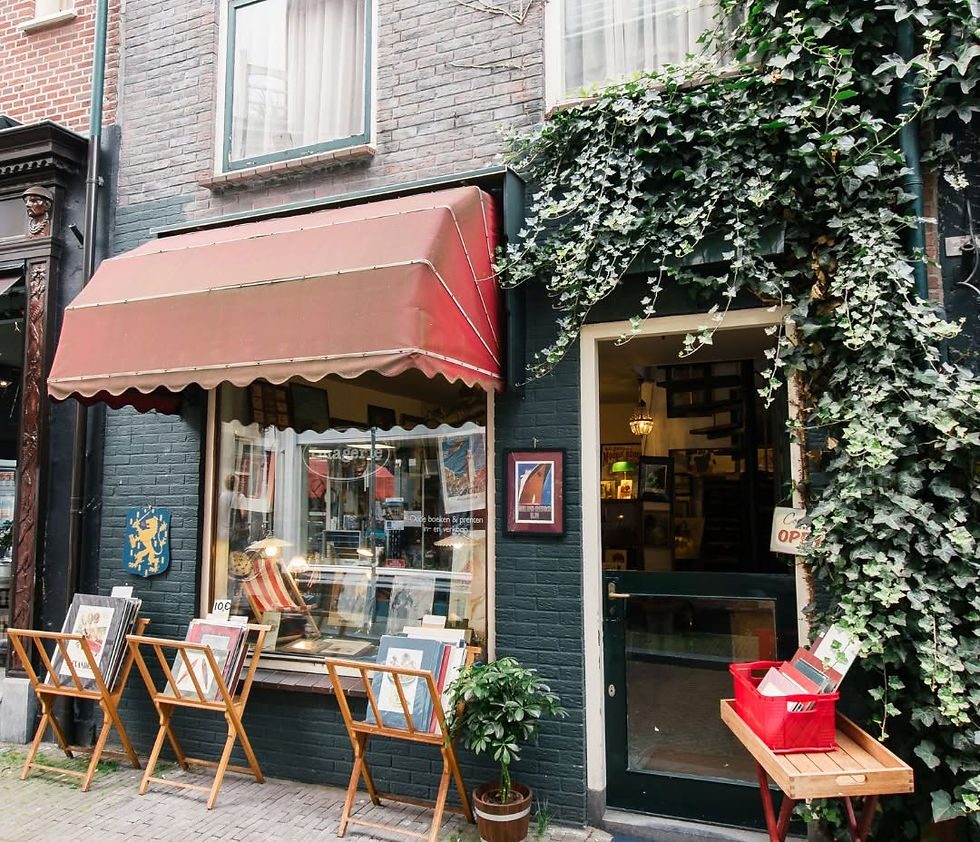
Walter Benedict is a popular brunch spot here (the Eggs Benedict, obviously). Oogst does vegetable-forward French cooking from a biodynamic garden in Wassenaar and has back-to-back Michelin Plate recognition. Good for a glass of wine before the beach if you're feeling fancy.
Evening: Scheveningen
Scheveningen feels like a completely different city from what you just spent the day in. Wide beach, North Sea waves, a 300-metre pier sticking out over the water, and beach clubs everywhere. The first time we came here after spending a day in the city centre we couldn't believe it was the same city.

Hop on tram 1 or 9 and in about 15 minutes you're at the coast. Get off at the Kurhaus stop. The Kurhaus is this grand 19th-century hotel right at the beachfront that looks like it belongs on the French Riviera. From there it's a short walk to the sand.
What to do here:
Walk the pier. It's free. There's a food hall with street food, kibbeling (fried cod bites, classic Dutch beach food), and an ice cream spot. The SkyView Ferris wheel is 50 metres above the sea with 36 enclosed gondolas. Go at sunset if you can. There's also a VIP cabin with a glass floor if you want to look straight down at the water, which I personally would not do but you might be braver than me.
Try a haring. Raw herring with diced onion and pickles from the fish stalls along the boulevard. The Dutch way is to hold it by the tail, tilt your head back, and just go for it. I know it sounds weird but it honestly tastes amazing. Just try it once.
Walk the beach. Head north from the pier and it gets quieter fast. Bring a jacket though. This is the North Sea. Even in July the wind doesn't mess around.
Dinner. Beach clubs like Zeezicht (known for North Sea sole and oysters), Werelds (open daily year-round, reliable for both lunch and dinner), and Manta Beach all have sea views and proper food.

If You Have More Time
Escher in The Palace (Lange Voorhout 74). M.C. Escher's optical illusions in a former royal winter palace. Interactive exhibits, great for photos. Tue–Sun 11:00–17:00, €14.50. Combo ticket with Panorama Mesdag on Tiqets.
Madurodam. Miniature models of Dutch landmarks. Mostly for families, but honestly adults enjoy it too.
Kunstmuseum Den Haag. World's largest Mondrian collection. If modern art is more your thing than Golden Age, swap this for the Mauritshuis.
Grote Kerk. 14th-century church near Grote Markt, 93-metre tower. One of the oldest buildings in the city.
Westbroekpark & Tearoom De Waterkant. A gorgeous park with an international rose garden. There's a hidden tearoom in the trees (open roughly April–September) where you can rent rowing boats and have lunch on a grass terrace next to the water. One of our favourite discoveries so far.
Zeeheldenkwartier. The "Sea Heroes Quarter." Art Nouveau facades, indie coffee shops, vintage stores, the cat cafe CoffeeCats on Weimarstraat. Good for wandering.
Practical Tips
Getting around:
The centre is completely walkable. Everything on this itinerary (except Scheveningen) is within a 15-minute walk.
For the beach, tram 1 or 9. Tap in/out with OVpay (any contactless bank card works). No need for a separate transit card.
Saving money:
Museumkaart (€75/year) pays for itself in 3–4 visits. Gets you into Mauritshuis, Panorama Mesdag, Escher, Kunstmuseum, all free. Buy it at any museum desk.
NS Group Ticket: Two people travelling together pay €38.50 total (any distance, off-peak). Three people: ~€12.83 each. Four: ~€9.63 each.
Scheveningen Pier is free.
Weather:
Bring a layer for the beach. Even in summer. The North Sea wind is real.
Rainy day? Just spend more time in museums and Indonesian restaurants. That's a perfectly good day.
Food plan:
Light breakfast at Café Blossom (Anna Paulownastraat, near the Peace Palace, open from 8am, great homemade cake and apple pie) or Café Soof (hidden inside the Nutshuis courtyard in the centre, a secret garden with a greenhouse and a pond. Seriously, it doesn't feel like you're in the city centre at all).
Big Indonesian lunch.
Light beach dinner. Kibbeling, herring, a drink on a terrace.
How to Get to The Hague
From | Train time | Cost (one way) | Station |
Amsterdam Centraal | ~50 min | €15.30 | Den Haag Centraal |
Rotterdam Centraal | ~25 min | €5.40 | Den Haag Centraal |
Delft | ~7 min | €2.80 | Den Haag Centraal |
Schiphol Airport | ~30 min | €9.60 | Den Haag Centraal |
Utrecht Centraal | ~40 min | €12.70 | Den Haag Centraal |
Trains run every 10–15 minutes. Last train back to Amsterdam is usually around 00:30 but check ns.nl on the day.

FAQ
Is The Hague worth visiting? Honestly, yes. World-class museums, the best Indonesian food in Europe, a proper beach, and way fewer tourists than Amsterdam. Most people who come here say they wish they'd done it sooner. We feel the same way about moving here.
Can you do The Hague as a day trip from Amsterdam? Easily. It's 50 minutes by train and the centre is compact. You can do the Mauritshuis, walk around the old city, eat rijsttafel, and still get to the beach for sunset.
What's the difference between Den Haag and The Hague? Same place. Den Haag is the Dutch name, The Hague is the English one. Locals say Den Haag. The official name is 's-Gravenhage but nobody actually uses that.
Is The Hague the capital of the Netherlands? Officially Amsterdam is the constitutional capital. But parliament, the king's office, the Supreme Court, and all the international courts are here. So in practice, yes.
Is Scheveningen worth it? Definitely, especially between May and September. Even in winter it's got this dramatic, moody thing going on. Just bring a proper jacket.
Best museum in The Hague? Mauritshuis for Dutch masters. Escher in The Palace for something different. Panorama Mesdag for a totally unique experience. Kunstmuseum for modern art and the world's biggest Mondrian collection. You can't really go wrong.
How many days do you need? One full day covers the highlights. Two days lets you go deeper. Three and you're basically living here.
We've been here a while now and honestly there's still places on my list I haven't gotten to. That's the thing about The Hague, it doesn't run out. If you end up going, let me know what you think. I'm always curious what other people find.


Comments