Visiting Å, Lofoten Islands - Things to Do in Norway's Last Village

Updated: 3 days ago
Have you heard about the village in Norway whose entire name is just one letter? Yes, It is just one! Å, the remotest village of Lofoten Islands in Norway, was never on our list of places to visit. We stumbled across it by accident while planning our trip from Tromso to Lofoten back in March.
When we discovered that the village had such a short name and that the road ended there, we immediately knew we had to be there! It is of course very exciting to visit the remotest corners of any country. Humans have always discovered the farthest corners of any continent just in this pursuit. We were no different, even if it meant that we had to drive 600kms from Tromso to reach here.
So the question arises, is visiting this remote village truly worth it?
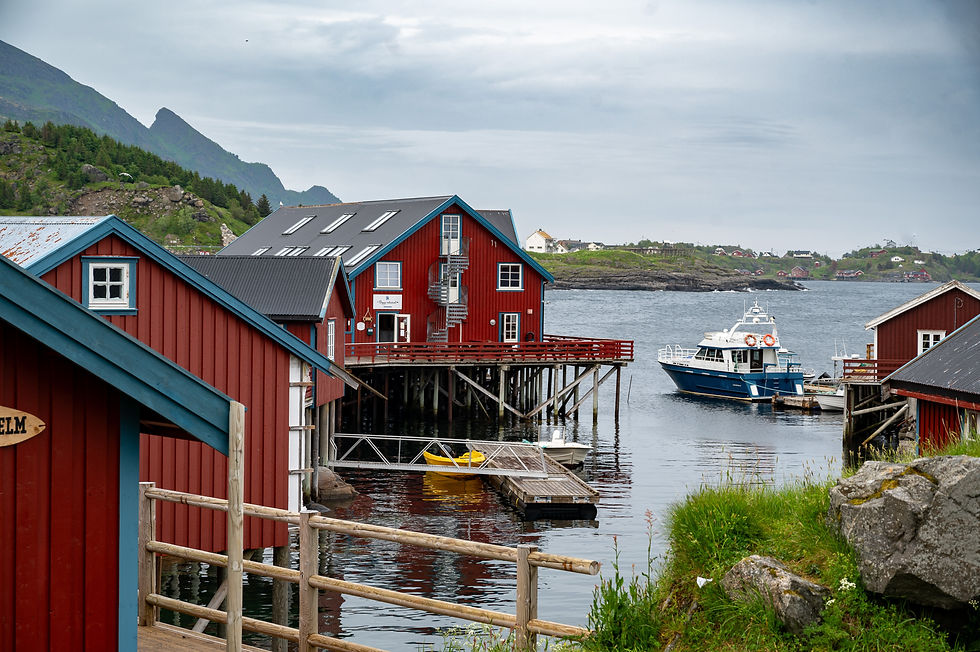
To answer that, let's start with a bigger question, should you be visiting the Lofoten Islands? And the answer is a very big Yes! Our Lofoten Islands trip was the most nerve-wracking exhausting trip we have taken in a car, and yet it is one we won't forget for many years to come, in a good way. These islands are filled with so much natural beauty, with majestic mountains rising out of deep oceans, incredible highways to drive your car with a panoramic view every second, and a chance to sail through the famous Fjords of Norway!
And since you will be making the trip to Lofoten Islands, it just makes sense to pay a visit to the village of Å. It is after all, the tip of the the iceberg and easily accessible. So here are few things to know about Å, and what makes it so worth it.

History of Å, Lofoten’s Best-Preserved Fishing Village
Å is located at the southernmost tip of Moskenes island and stands as a proud testament to Norway's fishing culture. On our way from Sørvågen where we were staying, to Å, all we could see was the rough ocean water battering on the rocks. And yet to our surprise, we could see fishermen tying up their boats in this weather, as if they had just returned back from conquering the seas. Lofoten Islands are not an easy place to be, it is where nature is both beautiful yet frightening. And yet, Lofoten is known for its history that stretches back to the stone ages 6000 years ago, when people's livelihoods used to depend on catching fresh Skrei (Norwegian-Arctic codfish). Dried cod is used to make "lutefisk", one of Norway's oldest culinary meals. In fact, in other parts of the world, it is considered a premium delicacy and used in various dishes.
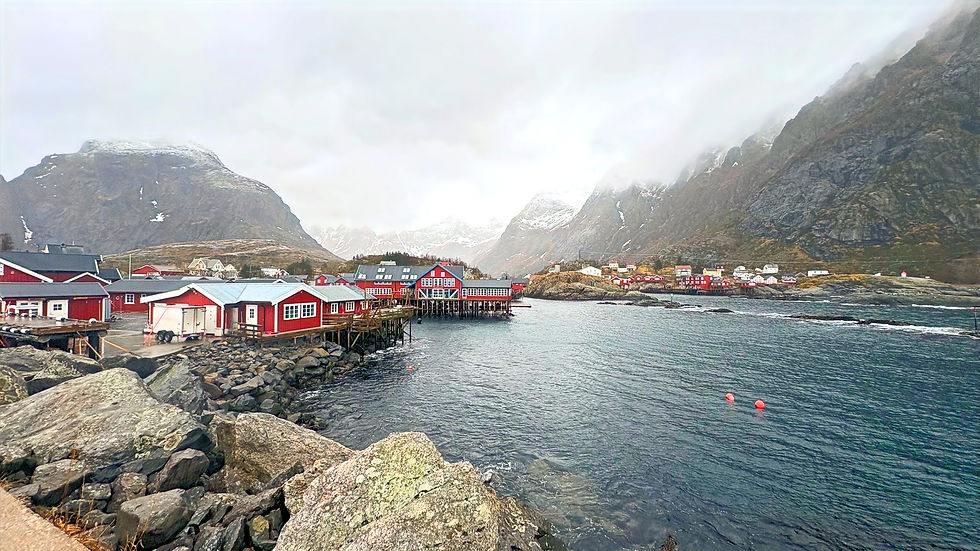
At one point in history, Å used to be one of the largest fishing villages in Lofoten. It was the perfect location for fishing in Vestfjorden region, as the cods travel 800kms to come to spawn here every winter. At that time, every fishing village used to have one ruling family, who used to control the local economy and export stockfish. However Å had two ruling families. I am not sure how they both co-existed, but it meant that there are two docks, two fish oil factories and 2 manor houses that stand side-by-side. From my visit, I got their names as the Ellingsen family and the Nilsen/Hennum family, and it was fun to know the 6th generation of Ellingsen family still resides here. Since there are barely 123 residents in Å, everyone knows everyone's business.

Right now, Å is no longer the most popular fishing village, and focus has shifted to other villages in Lofoten. However Å did not go the commercial way, instead it put in efforts to capture its fishing heritage. The entire place is a living, open-air folk museum. If that is not enough reason to visit this village at the edge of the world!
7 Things to do in Å, Lofoten Islands
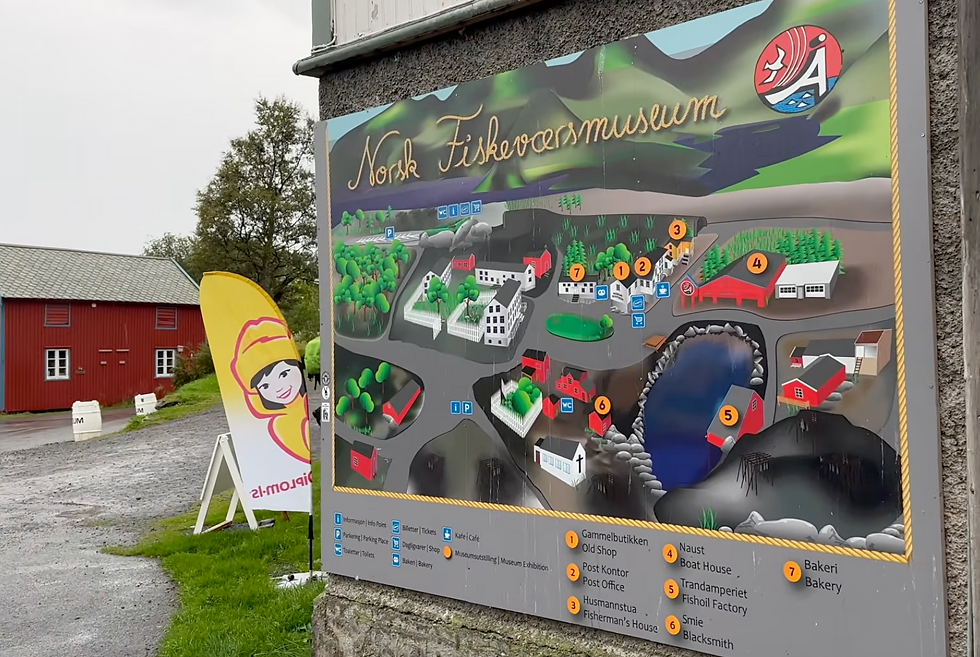
It always helps to have a map to plan your day. Å has a map of all things to do here displayed at the entrance. I was surprised there were so many things we could see here, considering it is a very small village. So let us go through all the things to do in Å.
Wander around the village on foot
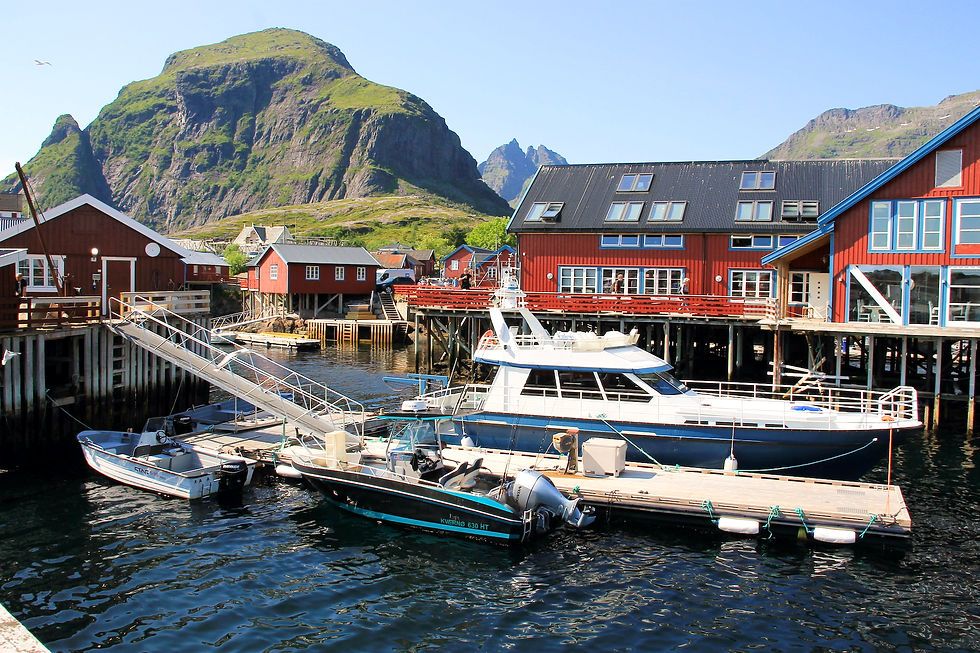
The best activities are always free! Once you arrive in Å, you will realise you have hit the end of the road. We had a car with us, and when we reached the parking lot, there was no more road ahead, only bushes and mountains. I opened Google Maps and confirmed this. The first thing we saw after walking into the village was how close it is to the sea. All the houses are perched right on top of the water. The houses are painted in the same colors as the rest of Lofoten Islands - red or yellow with white.
You can explore the entire village on foot within half an hour. You can walk a bit further into the village to get closer to the sea and the houses perched on stilts.
Visit the only stockfish museum in the world
The thought of visiting a museum about stockfish (dried cod) may not sound very appealing, after all, what is so fascinating about fish? However, the history of Lofoten is a story of fishing.
And the story of their hero, the stockfish, is a very compelling story. It takes you through the grit of Norwegians combined with the climatic conditions of this region.
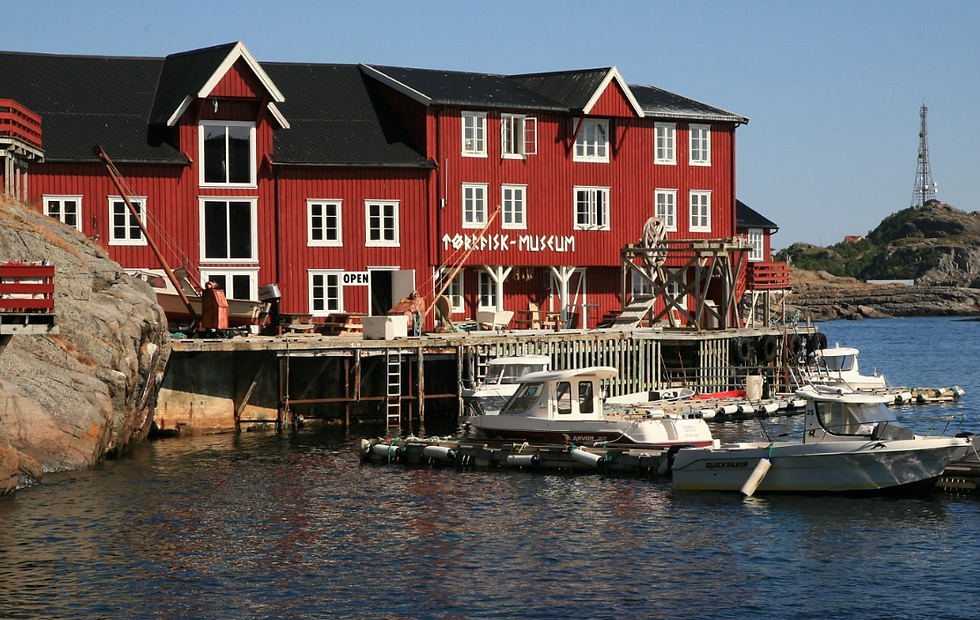
The Lofoten Stockfish Museum claims the title of the only stockfish museum in the world. In fact, it is located in an old fish landing station. The museum displays the process from when the fish is brought ashore until it is finally packaged and ready for export. This earlier used to be a family fishing business, later the owners transformed it into a museum.
There is a fascinating 18 mins film shown at the beginning that explains how all the Lofoten population made a living from fishing, I would recommend this as a must see before you start your visit to other exhibits. After the film, you will be taken through different rooms showing how the codfish are hung out to dry, and the tool used to process them. The enthusiastic owners/guide offer a very detailed explanation at every turn.
Explore the Norwegian Fishing Village Museum
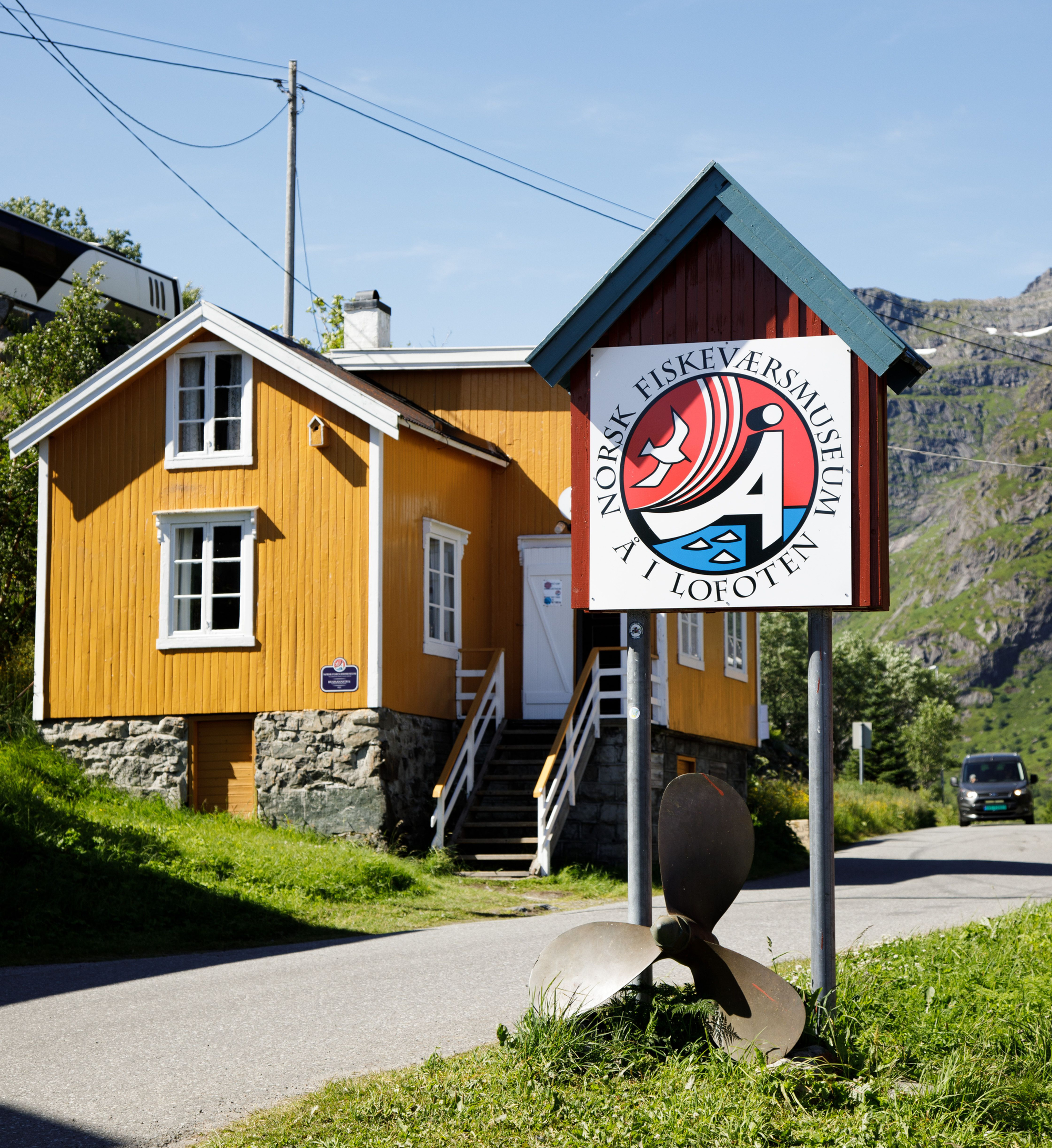
The Norwegian Fishing Village Museum is where you first arrive when you step foot in Å. It is an open-air folk museum consisting of 7 old buildings. It feels a bit strange to call it a museum, since it is a group of 7 different preserved buildings, and not one museum. These buildings will show you how people used to live and catch fish in Å, we found that super cool, considering they date back to the 1800s! In some of the buildings, you will have museum guides telling you stories about how the fish end up here, and the old folklores of this village.
Each building is numbered and the numbers clearly displayed at the entrance, making it easy to follow the museum map. Mostly these buildings are next to each other. It consists of a boat house, a fisherman's house, the old post office, a fish oil factory, the old shop, the village bakery, and a Blacksmith's workshop.

Start with the Old Shop
You can buy tickets to the Fishing Village Museum at the Old Shop (Gammelbutikken), which is behind the bakery (refer to No.01 on the map above). It costs 125 NOK ($13.00 USD) for adults and 95 NOK ($10.00 USD) for students and children aged 6 to 17. You can pay by card. You can also buy many souvenirs here, but I would keep that for the last.
Immerse yourself into the culture with a Fish Liver Oil Factory tour
Pay your visit to this very informative Cod liver oil factory, where they show you how oil is extracted from the liver of cod fish. Since the Cod fish travels over 800kms to reach Å, it's liver is pretty fit. It is also very big and allows for humans to extract oil from it. Here the guides will show you how it is extracted, and even ask you whether you wish to try some oil! Cod liver oil was an important source of vitamin D for people back in the day due to lack of sunlight in the winters.
Admire how people used to make boats in the Boat House
Another building central to this village is the boat house, where boats used to be repaired. It is a really big structure, however we were still surprised to see full-sized boats stored here, and not one, but many. Here you will see old fishing boats, nets, fishing equipments, and other tools, along with an informative film.
Visit the only bakery in town to try cinnamon rolls
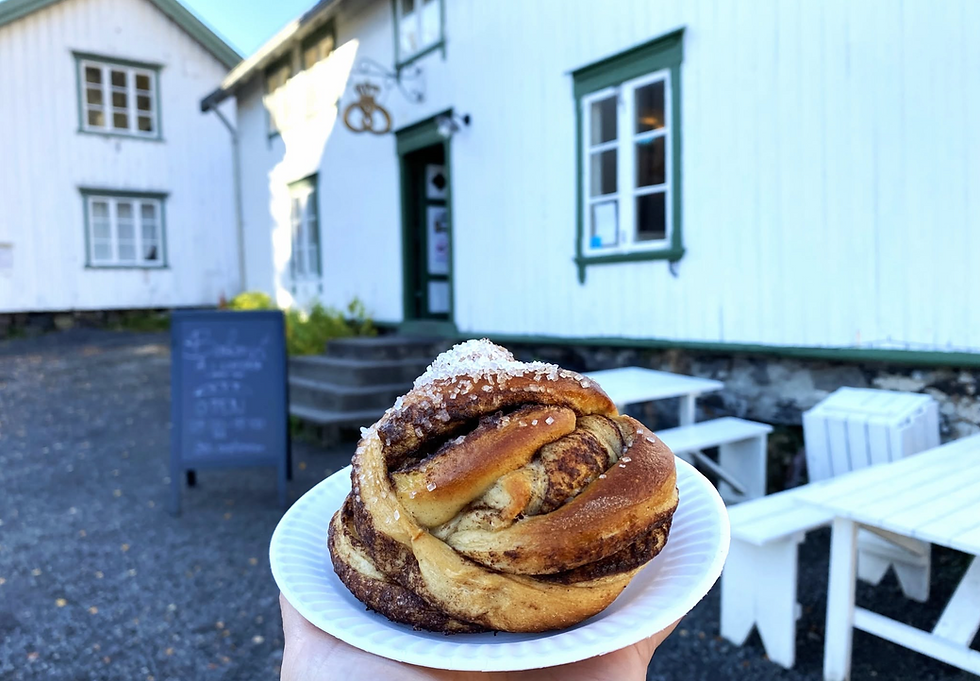
This is a really cute bakery, also part of the museum complex, and located right next to the ticket office. It is touted as serving the best cinnamon rolls found. The interior of this bakery feels very authentic and traditional, dating back to 1880s with a stone wood oven still being used and weathered materials on display. As soon as you step inside the shop, you are whisked back in time. People come here for the Norwegian cinnamon bun but you should also try their focaccia, it is equally good. The top is crisped with loads of topping and it is fluffy.
Experience the life of a fisherman in a Fisherman's house
A brightly painted yellow building calls out to you with its cozy interiors and different artifacts from the life of a fisherman who used to live here at one time. The museum has managed to preserve all the rooms from the fisherman family's life, and there is a museum guide inside who told us fascinating stories. I really appreciate the fact that there are guides in several of these buildings, as it feels more profound knowing this history.
Enjoy fresh cakes at the Museum Cafe
Since it was raining heavily at this point, we wanted shelter, and ran into this small cafe which we had seen right at the entrance to Å. We tried carrot cake and croissant here, with coffee and some hot chocolate. We could not complain, the food was delicious and the cafe atmosphere was cozy. The post office mentioned below in this list is right above this cafe, and the fisherman's house in a building close to it. I later heard that the cinnamon rolls from the bakery I wrote about above, can also be found in this cafe.
Hike around Å enjoying the coastal views
Do you wish to enjoy views of the Vestfjord, a giant bay that separates Lofoten from Norway's mainland? There is a short hike from the car parking lot, that brings you to a panoramic viewpoint that is absolutely breathtaking and stunning. You get to see the ocean and the various mountains that greets the waves. If you go at the right season you will also hear the seagulls really loud.
How to get there : Search for Viewpoint of Å or Utsiktspunkt Å on Google Maps (or check the map linked above). There is a very clear path from the parking lot to the viewpoint taking around 3 minutes max.

For more experienced hikers, there is a proper hike that connects Å and nearby village Sørvågen. Tindstinden hike is a moderate hike that will take about 1.5 hours and crosses 2kms. Tindstind is one of the last mountains on Lofoten which can be reached by trail.
Starting Point: The trail begins on the northern side of Lake Sørvågvatnet in the village of Sørvågen. From the top, you will get panoramic views of the village of Å, Lake Ågvatnet, the surrounding fjords, and the Arctic Ocean.

Rent a boat and explore the nearby Fjords
A wonderful summer activity is renting a boat and exploring the edge of the world! There are boats for rent at Å Feskarbrygga Rorbuer, a hotel in Å that also provides boat services independent of a hotel stay. You can drive these boats yourself, or you could also avail a guided boat tour. Guided boats come with a skipper for sightseeing and fishing, accommodating up to 12 people. You can enquire about the price at the reception of the hotel. More details here.
Experience the Northern Lights if you are lucky
The Northern Lights (aurora borealis) are visible in Å and across the Lofoten Islands from late August to mid-April, with peak viewing conditions from October to February when nights are longest and darkest. But you have to be lucky with the weather conditions to actually witness this. We made a long trip to Norway in winter so that our chances of witnessing the lights increased, and we did end up seeing them! So if you plan correctly, then you too could be lucky!
We found that getting to a location with minimal light pollution, and having a non-cloudy day, was crucial to seeing the northern lights. This is possible in Å due to it's remote location. The best time of night to witness them are between 22:00 (10 PM) and 02:00 (2 AM).

How to get to Å
Drive: Renting a car is the best way to reach all corners of Lofoten Islands. Å is located at the end of the E10 highway which is the main road that connects the Lofoten archipelago. It takes 6 hours from Tromso, 2 hours from Svolvær, and one hour from Leknes.
Ferry: Ferries operate out of nearby Moskenes. You can fly to Bodø from Oslo or Tromso, and take the ferry from Bodø city to Moskenes. It takes 3-4 hours, and runs more frequently in summers. Moskenes is only a 9-min drive from Å, alternatively take the public bus (Route 300) heading west toward Å. Book your ferry ticket in advance here: torghatten-nord.no
By Flight: There are no airports in the southernmost tip of Lofoten Islands. You can first arrive at Oslo, the capital of Norway, then take a flight to Bodo. From Bodo, you can take a flight to Leknes Airport (LKN), located about 67 kilometers northeast of Å, making it the closest local airport; or to Svolvær Airport (SVJ), located about 134 kilometers northeast of Å. From both airports, you can rent a car or take the county public bus (Route 300) heading west toward Å.
By Bus: There are public buses connecting the major places in Lofoten, however you need to plan around their timings. The buses are Bus no. 300, Bus no. 18-742 and Bus no. 18-772. Find the bus schedules here: ReisNordland.no

Places to stay in Å
Lofoten offers many beautiful places where you can spend the night, and most of the places are fishermen's cabins (rorbuer). If you want to immerse yourself into the culture of any particular village, it is best to book a night stay there. Since Å has a bunch of activities you can do, including hiking around this tiny piece of island, it would be a good choice to spend a night here. Here are a list of places to stay overnight:
Å Rorbuer
One of the best places to stay in Å is the Å Rorbuer, located in the middle of the harbour and the village. Most of the fishermen’s cabins at Å Rorbuer date all the way back to the early 1900s, when fishermen used them for shelter and accommodation.
These cabins have 1-4 bedrooms, which is good if you come as a bigger group and wish to stay together, or even if you are just a couple. You can book it directly via Booking.com. While it comes with all amenities you could ask for, this is one of the pricier options in Å, with prices doubling during peak season. It can vary from 180USD to 400USD based on the season.
There is also a fully equipped kitchen inside. I find this very helpful because Norway is not cheap, so cooking easy meals time-to-time helps you stay within budget. That's what we did!
Å-Hamna Rorbuer
These are a set of red wooden cabin on stilts on the sea, same as other houses in Å. While it is looks old and historical on the outside, it comes with all modern amenities and comforts inside. You can book it directly via Booking.com. The prices vary with peak season going at 230USD and low seasons at 160USD.
This hotel is right in the centre of the Fishing Village Museum buildings, however considering that the entire village of Å is reachable in a matter of 5 minutes, I think you can stay anywhere in Å. The choice ultimately comes down to views and cost. Here are some photos to show you how this cute cabin looks from the inside, and the views from its windows.
Å Feskarbrygga Rorbuer
This is a small and cozy rorbuer complex situated right in the centre of Å. It is run by a small family. You can book it here. You can either call them or email/ fill a form requesting the dates.
They have around 35 units, and offer double beds, bunk beds, etc. The rooms are priced from 160 - 210 USD. They also offer motorhome parking should you need it.
As written above in Things to do in Å, this hotel is where you can rent boats. You can either drive yourself, or take a guided boat tour. It would be a wonderful activity for the edge of the world! More details here.
Å Hotell - by Classic Norway Hotels
This is yet another classic hotel from the same chain as Å Rorbuer (first on this list). It is an equally beautiful choice with windows overlooking the harbour where you can see the fisherman cleaning the fish and boats coming and going. The hotel offers nine newly built hotel rooms, so if you plan to stay at a modern hotel, this is the one for you. You can book it directly via Booking.com
Lofoten Å Hostel
If you prefer to stay at a hostel, then this is a highly rated hostel in Å, situated right on the water. It is next to the bus stop, with an amazing view over the sea and the mountain close to the hostel. There is a fully equipped shared kitchen that you can use for making breakfast and meals during your stay. You can book it directly via Booking.com
Is Å worth visiting?
We loved our visit to this little village. I remember telling my husband about no more roads ahead, and his distinctly confused expression. But visiting Å is so much more than just reaching end of a place. Being here and soaking in the air, we felt as if time had stopped. The houses and the ocean reminded us of some faraway place where people live a different sort of life that we will never get to experience. It was helped by the fact that the municipality had preserved all its heritage by keeping the buildings intact and open for tourists. It also has so many outdoors activities you could do, that I would even recommend spending a night here to experience it all!
So this was my entire itinerary to visiting Å, the last village in Lofotens! Let me know when you do visit, whether you enjoyed it as much as we did, and whether you discovered something new! I have also published a complete Tromso to Lofoten Islands road trip itinerary for the winters, make sure to check it out to plan your Lofoten adventure!
Comments